
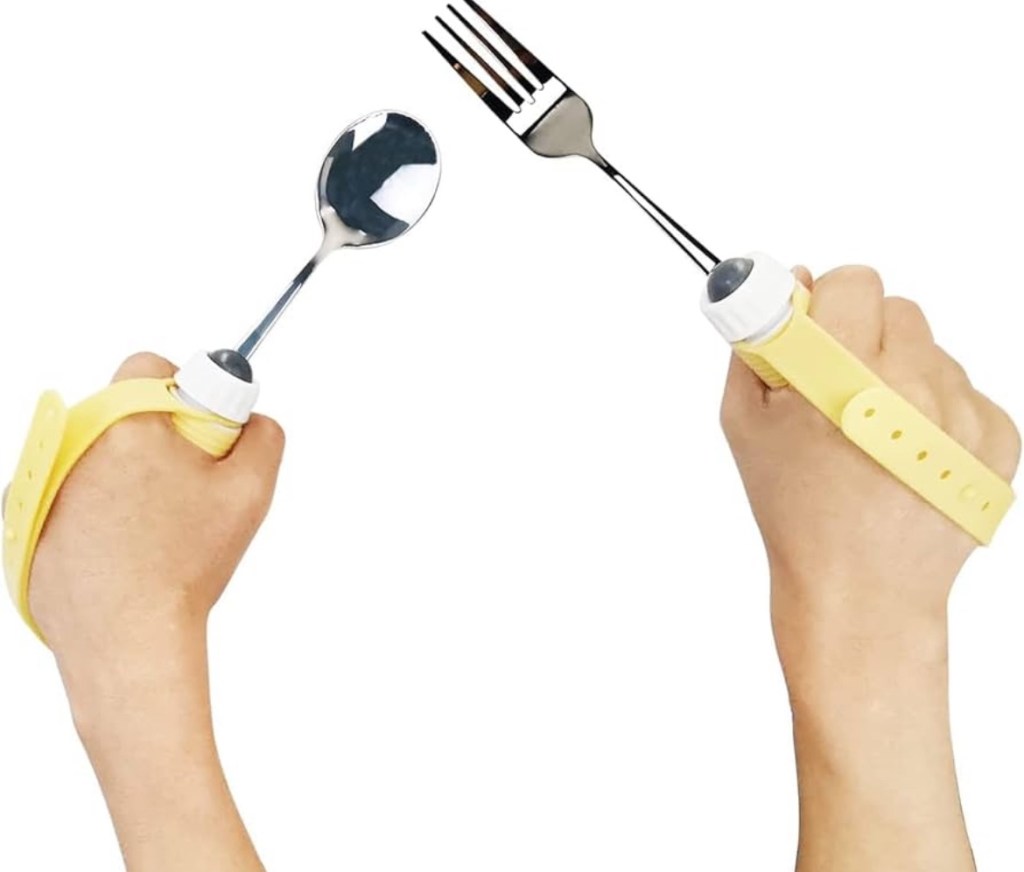
After a stroke, self-feeding can become challenging due to weak grip, tremors, one-handed use, visual neglect, or reduced coordination. As occupational therapists, we focus on restoring independence while maintaining safety and dignity.
The right adaptive eating utensils can significantly improve self-feeding performance, reduce caregiver burden, and promote confidence during meals.
Below are OT-recommended adaptive utensils commonly used in rehab and home settings, broken down by functional need.

1. Built-Up Handle Utensils (Best for Weak Grip)
Built-up handles increase the diameter of the utensil, making it easier to grasp for individuals with hemiparesis or reduced hand strength.
Why this works:
Requires less finger flexion Improves grasp endurance Easy transition from standard utensils
OT Tip: Start with built-up handles before introducing weighted utensils to reduce fatigue.
👉 Check built-up handle utensils on Amazon
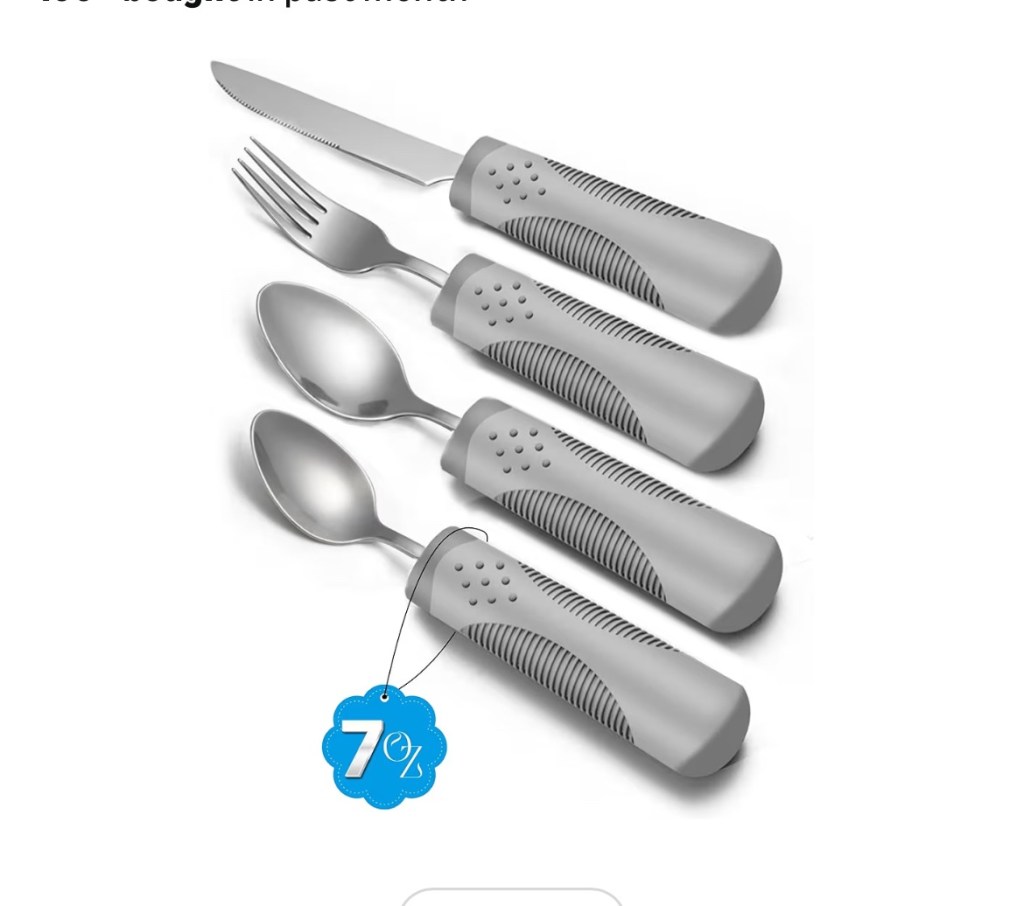
2. Weighted Utensils (Best for Tremors)
Weighted utensils provide proprioceptive input that helps dampen tremors, improving accuracy and control during self-feeding.
Best for patients with:
Intention tremors Ataxia Parkinsonian symptoms post-stroke
OT Tip: Use during seated feeding with proper trunk support to maximize effectiveness.
👉 Check weighted utensils on Amazon
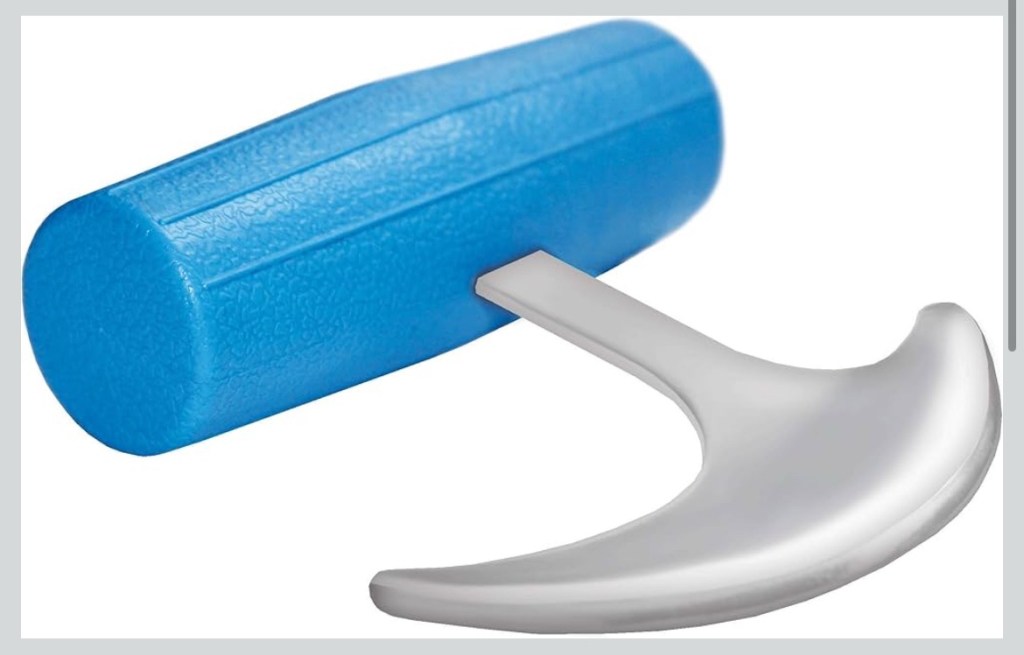
3. Rocker Knife (Best for One-Handed Eating)
A rocker knife allows users to cut food using a rocking motion, eliminating the need for bilateral coordination.
Why OTs love this tool:
Enables independent cutting Reduces frustration at meals Improves safety vs. standard knives
👉 Check rocker knives on Amazon
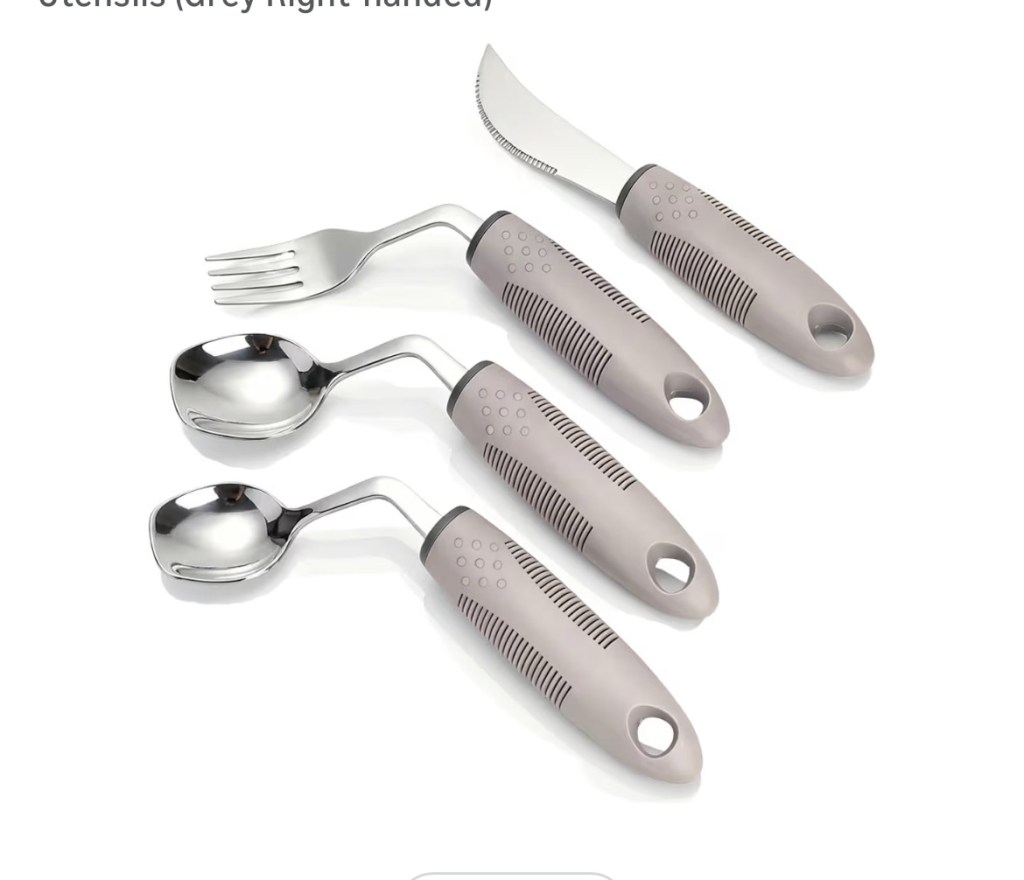
4. Angled or Bendable Utensils (Best for Limited Wrist Motion)
Angled utensils reduce the need for wrist extension or forearm rotation, which is common after stroke.
Helpful for:
Limited wrist ROM Tone or spasticity Poor motor planning
👉 Check angled utensils on Amazon
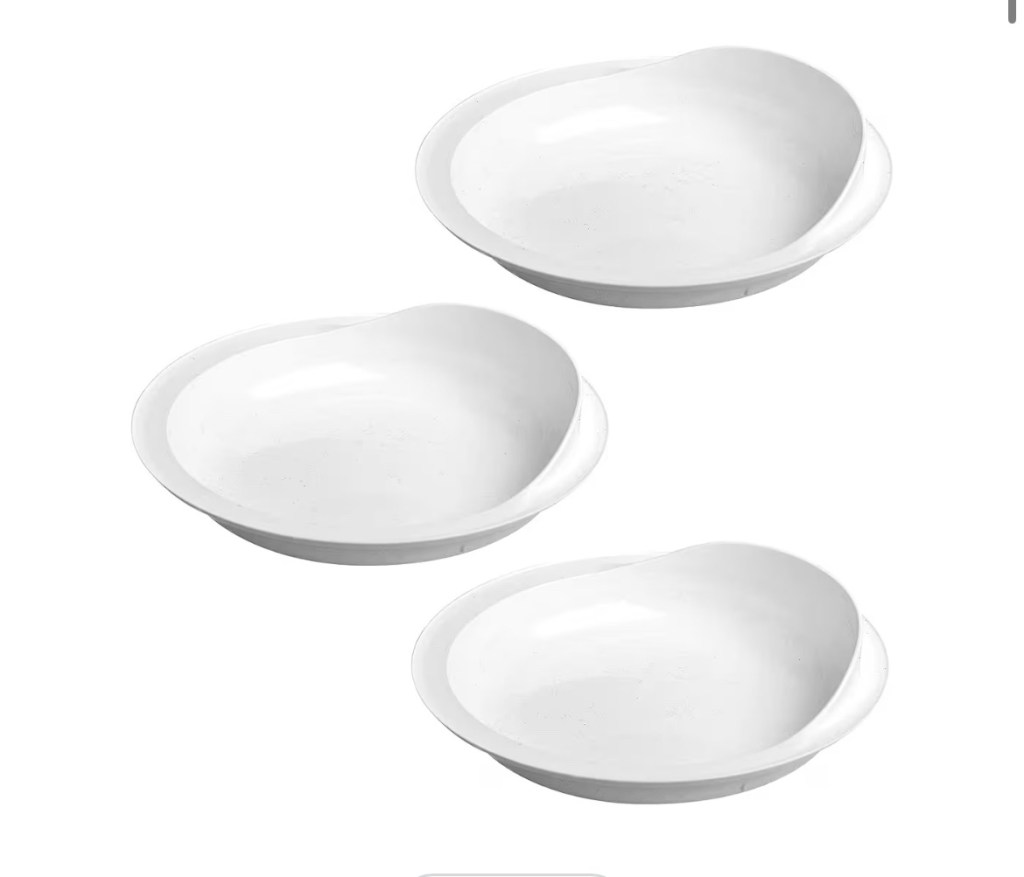
5. Scoop Plate + Adaptive Utensils (Best for Visual Neglect)
For individuals with right or left neglect, scoop plates paired with adaptive utensils help guide food onto the utensil without excessive searching.
OT Tip: Place high-contrast placemats to further improve visual scanning.
👉 Check scoop plates and utensils on Amazon
How to Choose the Right Adaptive Utensil
Consider:
Dominant hand post-stroke Presence of tremors Cognitive ability Visual neglect Endurance level
No single utensil fits every patient — trial and adaptation are key.
Final OT Recommendation
Adaptive eating utensils are a low-cost, high-impact intervention that can significantly improve quality of life after stroke. When paired with proper positioning, cueing, and repetition, these tools support meaningful independence at meals.
Disclosure
As an Amazon Associates, I earn from qualifying purchases at no additional cost to you.
 SNFOT
SNFOT 