As an occupational therapist, one of the most common things I hear from patients is:
“I don’t want to rely on equipment.”
“Using that means I’m getting worse.”
“I should be able to do this on my own.”
Let’s clear something up right away: adaptive equipment is not a sign of failure.
It’s a tool—and tools exist to make life easier, safer, and more independent.
Where the Stigma Comes From
Many people associate adaptive equipment with:
Loss of independence Aging or decline “Giving up” too soon
But here’s the truth: we all use tools to function better.
Glasses, phones, GPS, cars, dishwashers—no one calls those “giving up.”
Adaptive equipment is no different. It simply reduces the physical cost of daily tasks.
Independence Isn’t About Doing Everything the Hard Way
Independence means:
Getting through your day without crashing Doing tasks safely Having energy left for things you actually enjoy Reducing pain, fatigue, and injury risk
If standing in the shower leaves you exhausted for hours, are you really independent—or just drained?
Using a shower chair doesn’t take independence away.
It gives you your energy back.
What Adaptive Equipment Really Does
Adaptive equipment helps by:
Conserving energy Improving balance and safety Reducing pain and strain Allowing tasks to be completed consistently
Instead of pushing through and paying for it later, you’re working smarter—not harder.
Common Adaptive Tools (and What They Actually Help With)
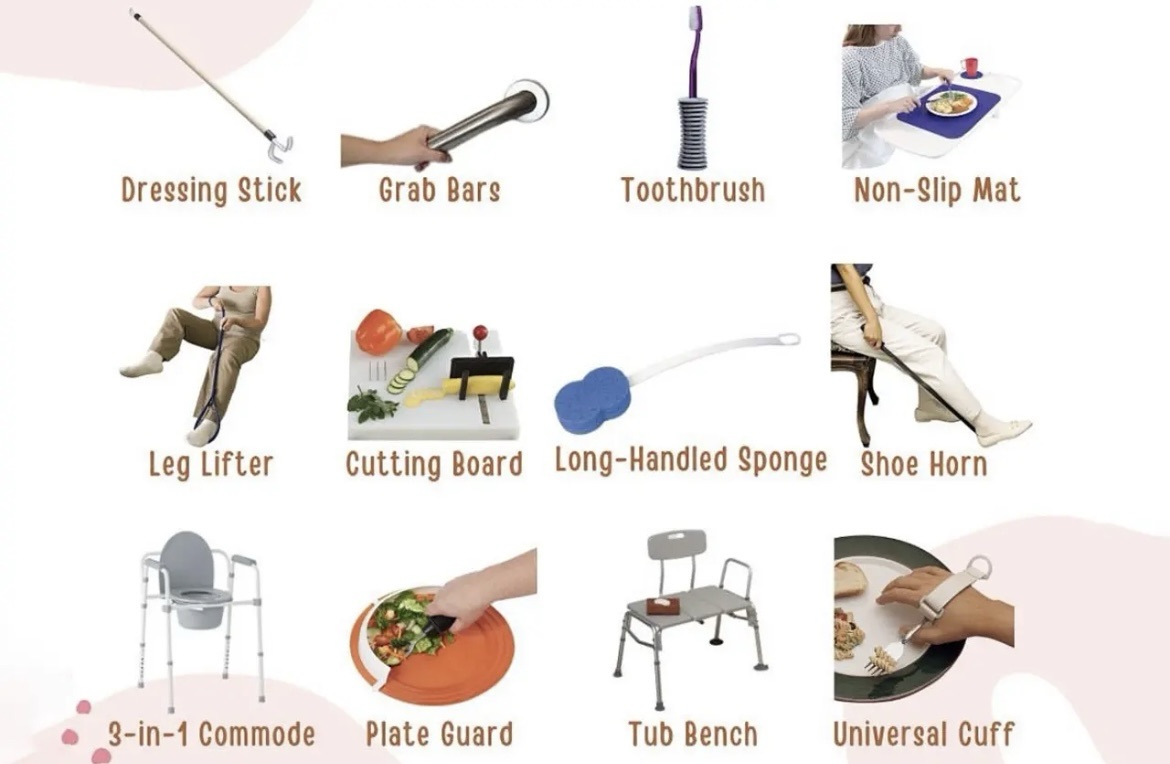
Shower Chairs & Tub Benches
Reduce fatigue and fall risk Allow longer, safer showers Save energy for the rest of the day. https://amzn.to/4pVSXXW
Handheld Shower Heads
Less reaching and standing Easier hair washing while seated. https://amzn.to/49Tm60d
Dressing Aids (reachers, sock aids, long-handled shoe horns)
Reduce bending and balance demands Make morning routines less exhausting.
Grab Bars & Rails
Increase confidence and safety Reduce fear of falling (which itself is draining).
Stools in the Kitchen or Bathroom
Let you sit during high-energy tasks Cut energy use dramatically.
The OT Perspective: Equipment Is a Strategy, Not a Setback
In occupational therapy, adaptive equipment is part of energy conservation and task modification—not a last resort.
Many patients actually:
Do more when they use equipment Feel less anxious about daily tasks Need fewer rest breaks later Experience fewer pain flares
The goal isn’t to “push through.”
The goal is to live well.
“But I Don’t Want to Become Dependent on It”
Here’s the reality:
You’re not becoming dependent—you’re becoming efficient You can still stand when you want to You’re choosing when and how to use your energy
Think of adaptive equipment like a volume knob, not an on/off switch.
A Gentle Reframe
Instead of asking:
“Do I really need this?”
Try asking:
“Will this make my day easier?”
“Will this help me have energy later?”
“Will this reduce my risk of injury or fatigue?”
If the answer is yes—that’s not giving up.
That’s self-preservation.
Final Thought
Using adaptive equipment doesn’t mean you’re weak.
It means you’re listening to your body.
And that’s one of the strongest skills anyone can have
 SNFOT
SNFOT 